The significance of Oud (oil and chips) in international culture.
Oud, from the holy and revered Agarwood tree, is one of the world's most expensive natural raw materials, valued at thousands of dollars per kilogram.
The Birth of a Scent: In its natural state, the Agarwood tree, from the species Aquilaria, is pale and odorless. When the wood is wounded, injured or infected by a specific mold, the tree reacts by soaking its core in a thick, dark, aromatic resin to heal itself. This transformation takes decades, and only a tiny fraction of wild trees undergo the process.
A Complex Aroma: Unlike a simple floral or fruity scent, agarwood has a rich, hypnotic, and deep fragrance. It typically combines sweet, woody, earthy, and slightly spicy notes, which can vary depending on the region the tree is harvested from.
Holistic and Healing: Beyond its perfume, agarwood is considered a "living medicine". Traditional remedies across Ayurvedic, Chinese, and Tibetan practices use it to treat digestive problems, reduce inflammation, and induce deep mental tranquility.
Oud in Christianity - Agarwood (Oud) not only plays an important role in Catholicism and Protestantism but is also used in the anointing rites of the Roman Catholic Church, the Eastern Orthodox Church and some Protestant churches, mention the important role of this precious wood in blessing, prayer, funeral, etc. Holy oil is usually made from olive oil, Agarwood (Oud), myrrh and musk. In Christian history and biblical tradition, after the earthly life of Jesus, his body was lovingly prepared with precious myrrh and Agarwood (Oud). Growing an Agarwood tree is also an ancient Christian tradition for the bride and groom to start a fulfilling marriage.
Oud in Islam – Agarwood (Oud) holds deep cultural and traditional reverence in the Muslim world, heavily praised throughout the Prophetic traditions (Hadith). It is traditionally burned as bakhoor (incense) or applied as a pure oil to perfume garments, welcome guests, and create a tranquil, pleasant environment optimal for worship.
The Sunnah: The Prophet Muhammad ﷺ loved pleasant scents and specifically extolled the virtues of Agarwood. In Sahih al-Bukhari, he explicitly recommended its medical benefits, stating that Indian Oud (Oud al-Hindi) holds a cure for multiple ailments. Furthermore, Sahih Muslim records that the Prophet ﷺ would fumigate his surroundings with pure aloeswood (Oud), a tradition of cleanliness and environmental care carried on by his companions. The Hadith even describes Oud as the fragrance used in the censers of the people of Paradise.
Personal Perfume: Adorning oneself with fragrance (Teeb)—particularly pure, traditional Oud oil—before entering the mosque or establishing prayer is a highly virtuous act of personal hygiene and an established Sunnah. This deep sensory custom symbolizes the high value Islam places on cleanliness, hospitality, and presenting one's best self before the Creator.
Sustainable - Through ethically grown and sustainably harvested Oud products, The Outback Company honours the human responsibility to care for the Earth, actively protecting the endangered Aquilaria species from extinction for future generations. You can help to sustain Agarwood (Oud) forever, by supporting commercial farm operations, producing ethically grown incense grade chip & oil.
Request information
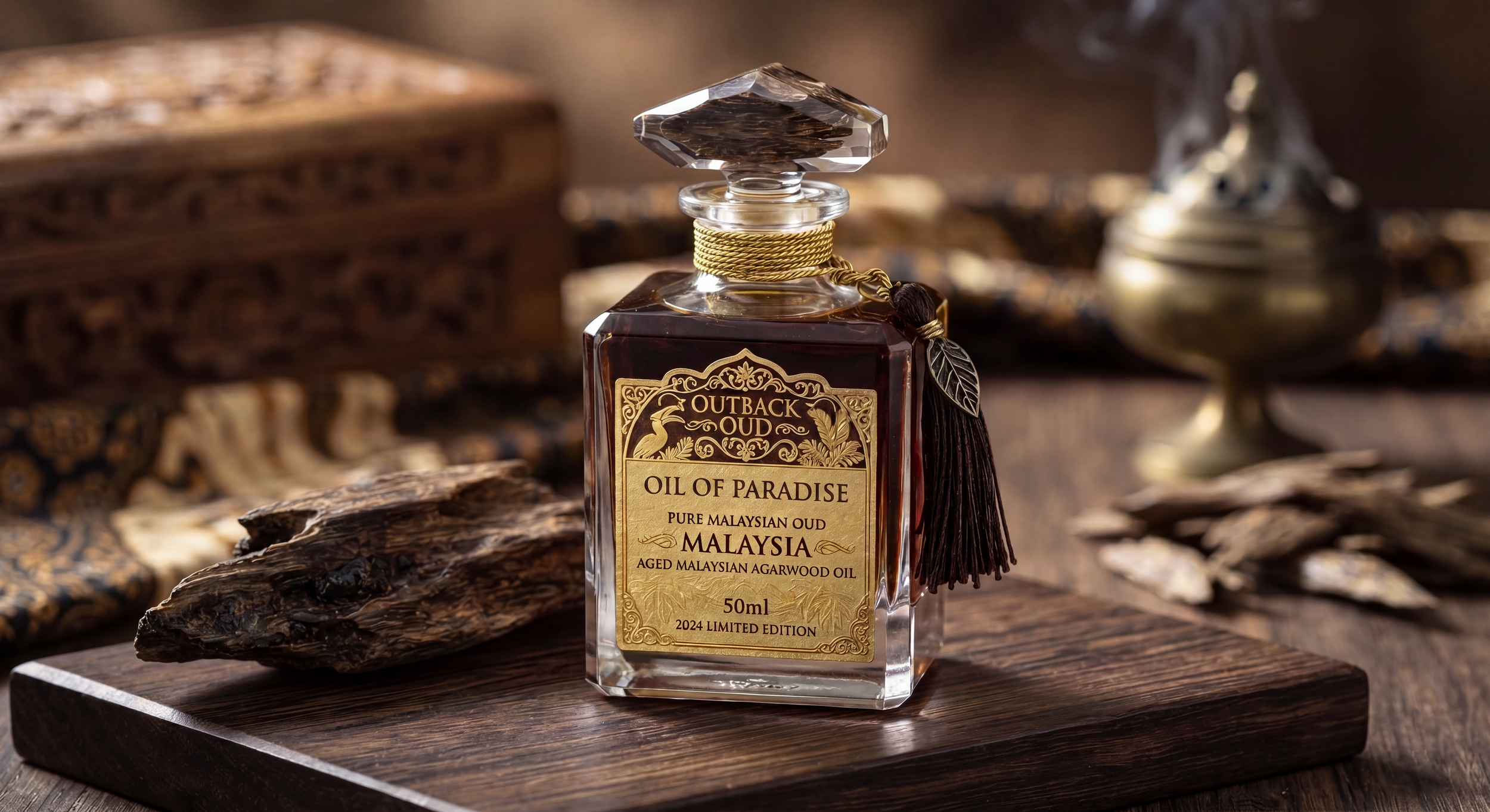
Submit the inquiry form to ask about our current crop of Agarwood Oil and Pure Incense Chips. We currently have products available from 3 regions in Malaysia - Selangor, Melaka and Kuntuan.
n 2028 we will have newly harvested chips from Aquilaria Malaccensis, grown in the coveted and world renowned Leyte region of the Philippines. Ask about the waitlist for this highly prized aromatic timber, traditionally used as a perfume and incense product.